Tuesday, 30 April 2024

Hunches

Before out next CoL meeting we have been asked to think about some of the hunches that we might have about our inquiry to share with our other colleagues and see if they can offer some insight into our inquiry as well. I will break down each of these below. 

Hunch One: If I encourage my students to share their ideas during guided reading sessions, then they will gain confidence in their reading and be able to answer questions related to what they have read. 

I have been finding that confidence is a huge area that needs to be worked on with my target group, they often need to be prompted to share ideas with each other. If they are not prompted they will just sit there and stare at each other until I do that thing that all teachers do and jump is to save the awkward silence and try and phrase the question a different way. 

Hunch Two: If I focus on extending discussions with my group using strategies such as ground rules for talk they will be able to manage themselves to have group discussions. 

We have been using ground rules for talk as part of RPI so I think I want to try and focus on using this with this group. I would like to start it off by maybe using conversation starters that aren't even based on reading to see if this will help the groups share with each other. 

Hunch Three: An emphasis on using images and specific generic tasks to show what inferring and other reading comprehension skills will enhance my students ability to understand more complex parts of the text and answer questions that require inferring and referring back to the text.

One thing I noticed from the data is that this group often forget to refer back to the text to find clues and answer questions, so this is something that I am going to focus a lot on to ensure that they are using the text. I have really enjoyed looking and exploring task boards through RPI so have been looking at ways to use generic tasks to help learners with these skills, we have skill builders each RPI session which allows up to look at amazing resources that we can use in the classroom. I also think taking it back to just inferring thing from images will also be helpful this could be part of our warm up when we are doing guided reading.

Hunch Four: An emphasis on understanding how to have basic conversations as well as teaching social skills and norms will enhance my students ability to share during reading sessions. 

I added an extra one because the more I have been thinking about it and reflecting the more I keep coming back to that basic conversational skill. I think this is something that needs to be explored and could come back to the confidence part of this group of students. 

These are my hunches so far, I am looking forward to discussing these at our next CoL meeting and to have some feedback and ideas from my colleagues.

Friday, 5 April 2024

RPI Day 3: Text Selection

Today is day three for RPI and our focus this week was around text selection. I really enjoyed this session as we were able to delve deeper into different text types and think about how we could use these in the classroom. 


Digital and Print Texts 

We started off the morning looking at the different types of texts that we can use in the classroom. Dorothy gave us some really great tools that we can use on our devices and reminded us of the importance of using these tools in sync with our deliberate acts of teaching to strengthen our literacy program. One tool that I am quite excited to look into that I hadn’t heard of before was Vooks so I will be adding that to be checked out over the holidays!


Choosing appropriate texts


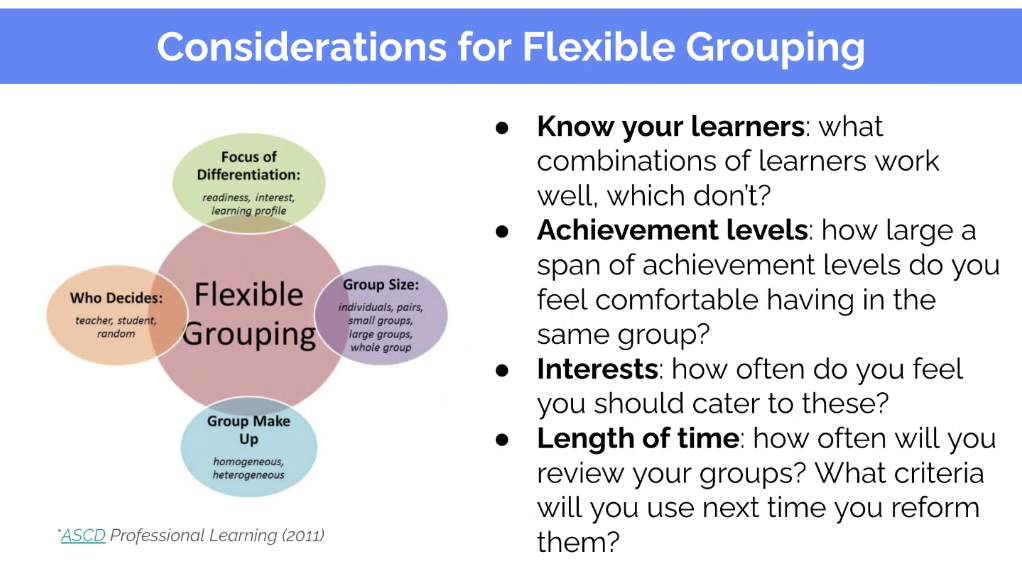
This slide really resonated with me during this session as I haven’t thought of flexible grouping in this way. I really liked how we talked about grouping students based on their interests and this doesn't necessarily have to be for a long period of time. I think I focus so much on the groups that I have made and moving students around based on ability that I forget that there are other ways of integrating flexible grouping into our literacy sessions and allowing others to share their thoughts and ideas with others from different abilities to gain a different perspective. 


Planning and Finding texts for your group

I had a really good reminder about some of the key resources that we have access to in order to know what is in a text and the types of vocabulary that will be found in the text before selecting it. I use journal surf all the time and often forget about TKI. This part of the day was a really good reminder to check out TKI and also think about using resources from ARBs. 


Text Coverage 


I really loved this slide from this session and the talking points that came from it. I often forget that we can use images as text and this was a really good reminder that we can pull a lot out of an image. This made me think about how I could use these as a shared reading piece or how we can use images linked to what we are learning to have whole class and small group discussions. This will be a really great way to link reading and writing together as we can pull out the key information and then the students can turn this into descriptive writing. This part of the day was a really good reminder of the different types of texts and how we can pull them together within our literacy programs. I also really want to check out “A New Dawn” which Georgie recommended! Add that to the holiday reading list!


Skill Builder - Summarising

Loved this part of the day where we were given a huge amount of resources that I cannot wait to check out properly over the holidays and have a look at some of the key activities. The one resource that I am really excited to check out is The Grammar Project. 


Selecting Texts for the Wider Reading Program

I have a whole list of new books that I am so excited to check out over the holidays, thankyou Georgie! We had a task for this part of the day where we had to think about the different types of reading we have in our classroom and if we timetable for them or not and I am so guilty of not timetable things I just decide that I am going to do it in the moment. So that has given me a lot of food for thought to make sure that I am timetabling things for myself to remember. I am super excited to try buddy reading in my class next week as this is something that I am not doing in my class at the moment. Another thing I want to add into my classroom program is Shared Reading which I do at times but not well. I am super excited to shake up my literacy program from this session!


I really enjoyed today's session and I feel that I have gotten a lot out of text selection and thinking about the different text types that we can use in the classroom. I am very excited to check out the new book recommendations and to add in buddy reading with my students next week! I have lots of new resources and ideas to check out in the holidays which is exciting and I think with week 11 next week I will play around with some of these ideas in the classroom so that I can act on them straight away in week 1 of term 2!


Thursday, 4 April 2024

PAT Data

One of my tools and measures was to look at PAT data in more detail to see areas that my target group excel in and areas that might need development. In this blog post I will outline my findings from PAT Reading and PAT Star data. 


I have a group of year 5 students and a group of year 6 students which is why the number of questions in each area is slightly different. Below I will look in detail at each category of question and explore what the data shows. I have used PAT Pānui - Aratohu Kaiako (Teacher Guide) which is available online and gives a great run down of each of the questions and areas. I have used direct quotes from the resource created to breakdown what each type of questioning means and I have put these in italics. I thought about rewriting them in my own words but the guide succulently details each type of questioning well. 

Retrieval
Questions require comprehension without needing to make any inference, so that the answer within the text can be matched to the wording of the question (PAT Pānui). From the data above I can see that this area is mixed with some of the students do really well in this area and some needing some extra support. From looking at this data and seeing the students in this group I think they have forgotten to look at the text for the answer and we will need to make sure that we are focusing on referring back to the text. 

Local Inference 
Questions require comprehension of implied information from within relatively small sections of text. The answers are straightforward and localised but require some inference where the answer is not explicitly stated in the text (PAT Pānui). From the data above I can see that this is an area where the students really struggled to answer the questions. This has highlight another are that needs work. 

Complex Inference
Questions require ākonga to connect information from different sections of text to draw an inference. Complex inferences may require linking of more than one idea or phrase and analysis to identify the best answer (PAT Pānui). Looking at my target students data I can see that some students did well in this area however there is also room for improvement. 

Interpret and integrate
Questions integrate ideas and information making sense of the intent and developing a more complete understanding of the entire text. At this level of inference ākonga use their own experience and understanding to unpack more abstract ideas and meanings within a text. (PAT Pānui). 

Critique and Evaluate
Questions require ākonga to draw upon knowledge of language use, presentational features, and general or genre-specific features of texts and understanding of how the language and features determine the meaning or purpose. These questions might be about how the writer achieves a particular purpose or meaning. (PAT Pānui). 

As I have looked through the data and each of the areas that my target group needs to work on I can see that there is a trend in this data. As I am observing it I can see that the students are glossing over key areas of the text and are unable to answer questions directly related to what they have read which impacts their ability to infer meaning. Therefore this is the first part that I am going to look into with this group of learners is being able to pull out key information confidently.

PAT Star
I have added this data in as I have found the results interesting and can see that with this group we will have to focus on making meaning of words in the text that we are reading which can be linked to inferring meaning of the text as well as the words. 


Reflection
One thing I have noticed with this group is that they are very capable with reading they just struggle with sharing their ideas with each other. So one key area that I need to focus on to begin with is confidence in reading and allowing the students to feel confident in themselves and their reading. 

Tuesday, 26 March 2024

Tools, measures and approaches

As stated in one of my previous blog posts I have looked at our PAT data from my students to frame my focus for my inquiry. I have looked at this on a very surface level so far so my next step is to dive deeper into these PAT tests and analyse the places that need work. I have started to think about how I will measure progress with this target ground and this will be PAT data, running records data, observations, probe tests and student voice. I will outline each of these in a bit of detail below to show how I intended to use this data, this will also give me an indication of what my next steps will be with my target group. 

PAT Reading Test
I have so far just looked at the stanine and scale score so far with this data. What I have learnt from RPI is to look deeper into the PAT data where I will look at where my target students did well and what areas that need work. I will analyse this data in my next blog post. 

PAT STAR
Again like PAT reading I have just looked at the stanine and scale score so far but I am interested in digging deeper into this data to see what areas this group excel in and what areas might need some improvement. 

Running Records 2023
I have also had a brief look at this data from last year and would like to analyse in detail what areas my students struggled with in these tests. 

Probe Test
We reserve running records for mid year and end of year testing, so I have decided that I will probe test each of my students to get a clearer picture of where they are at with reading and what areas need development. 

Student Voice
Finally as being part of RPI we have been given a reading profile survey that I will be using to gain student voice on reading and how they find reading. I will outline this in a later blog post. 

These are some of the measures and tools that I will be using going forward, I am excited to analyse the data further to then see what my next steps are with my inquiry. 

Thursday, 21 March 2024

Academic Reading

Our next CoL PLG is this afternoon and we have been asked to read a piece of academic reading and to highlight some quote from the text to share with our colleagues. We have only been tasked to read the first few pages however I have found it very interesting so far so I think I will continue reading it to the end. The reading is "Analysis and Discussion of Classroom and Achievement Data to Raise Student Achievement" by Mei Kuin Lai and Stuart McNaughton. This is a very fitting article as I have been looking at my data for both my CoL inquiry and RPI that I am currently taking part in. From the first part of the article here are the five key quotes from the text that stood out to me. 

  • In the late 1990s, research on schools involved in Ministry of Education projects indicate that there were a sizeable proportion of schools that did not analyse and use achievement data to improve their practices, but recent research indicated that most schools now regularly use data to inform their practices (Lai and McNaughton 2010). 
  • Using a broad range of data is recommended, including data from assessments, observation of students in class, homework and ‘student voice’ (e.g., student questionnaires).
  • The literature indicates that focusing primarily on achievement information, such as on national standards or high-stakes assessment, has failed to improve students’ literacy achievement (and by implication, failed to improve teachers’ practices).
  • It could be one or several of these issues that is the cause of the poor score, and teachers need to know how to put together a teaching programme that can address these issues.
  • For all these reasons, we argue that connecting achievement patterns to teaching patterns is essential if teachers are to draw the appropriate inferences from the achievement information to develop more effective teaching practices.
I am looking forward to discussing these key points this afternoon during our CoL PLG and will reflect on this on my blog after our meeting, so watch this space!

Tuesday, 12 March 2024

Target Group Selection

My target group has slightly evolved over the last few weeks as I had intended to focus on a group of students that were across two different reading groups however I have had a few students not return to Pt England this year. So what I am in the process of doing is combing both of these reading groups and having them all as my group of target students for 2024. Below I will outline some of the ways in which I have selected this group of students to be my target group. 

2023 Data
The first thing that I did was look at the data from 2023 and see what their end of year running record age and level was. I have also looked at end of year PAT data to gauge where these students are. 

2024 PAT Data
Now that we have finished testing and I can see the PAT data from this year I have had a overall look at the data across my team and class. From this I have then looked at the students that I had initially selected as my target group and the students around similar reading ages who have returned to Pt England this year and I have had a deep dive into their PAT reading and star tests which I have recored and will show later on this term. 

Classroom Observations
As stated in one of my previous blog posts I used observations of students and what they are showing during our reading lessons. I have observed through guided reading sessions to see how students interact with each other and how they share ideas in a group. I have observed students reading aloud in a guided reading session. I have also observed these learners during independent reading time to notice what might be happening for them in reading. 


Learner survey
Finally I have used the data collected from my learner survey to see what trends there are in the responses of students and how they feel about learning. 

Each of these things that I have looked at has contributed to why I have selected this group of students to be my target learners this year. Along with the discussions I have had with senior leaders and other colleagues. 

Sunday, 10 March 2024

RPI Day Two: Know your Learners as Readers

For our week 2 RPI I had to jump in a few days early as we have our year 5 and 6 camp starting this week! So I was very lucky to be able to join the Tuesday crew and learn all about knowing our learners as readers. This has been a really enjoyable session as it has reminded me of some hidden gems in PAT as well as taught me some new things that I am very excited to try out in my classroom over the next few weeks.

Assessment 101
For the start of our session today we look at formal and informal assessment data and how this can lead to more reliable judgement. This was a really great start to reflect on the things that I am doing in the classroom for formal and informal assessment and what I can also add to strengthen this. I do notice things about my students as we are reading and often just keep these in my head rather than writing them down or sharing them with others in my space to read. This got me thinking about out first week of RPI when we talked about modelling books and having somewhere to store this information so that it is shared with others in my team and my release teacher. So that again has been added to the to do list so watch this space!!

Keeping track of learning
We were introduced to the teacher workbook, which upon reflection is a great resource that has been shared and there are so many things that I will take out of this and use for my own tracking and planning. This is also something that I hope to share with my team so that we are all on the same page with our planning and tracking. The assessment part of this workbook is something that I will start using. I have been using something similar however they are all under a range of different tabs so I like the idea of having this all in the same place. I am really excited to use this with my data collection.

Assessment Tools 
I really enjoyed this part of the session as it made me think about all of the wonderful things elements that are available with PAT data. I have used some of these areas previously in my inquiry however have forgotten some of the gems that there are. I do really love looking at data and cannot wait to have a look at all of my data in depth in the next few weeks. One thing that I found really cool was being able to look at the class or group as a whole in comparison to the norm. This was something I had not used before and I can't wait to explore it in more detail. 

Learning intensions and success criteria
The final part of our session today was looking at learning intentions and success criteria. I really enjoyed using the planning part of the workbook. I currently use sheets but I think the way this has been set out is something that I will implement. It is such a good tool to look across groups and to keep track of students reading ages and levels. I think again this is something that I will trial myself for the rest of the term and see how it goes and if successful will share with the rest of my team for planning next term. 

I really enjoyed today's session and getting to meet the Tuesday cohort of RPI teachers. I have definitely learnt a lot and cannot wait until after camp to reset my reading program in my classroom!

Reflections for Bursts and Bubbles

First off I would like to say a massive Thank You to Fiona Grant for all of her support and guidance during my CoL inquires over the years. ...