Showing posts with label CoL 2024. Show all posts

Tuesday, 19 November 2024

CoL Evaluation 2024

The time has come to evaluate my CoL inquiry from this year. I have really enjoyed completing my inquiry this year and I feel that it was more focused around student input and engagement. With being part of RPI this year I also had the opportunity to work alongside some experts in the field of reading and make changes to my practice that were meaningful and well research. If you have check out my bursts and bubbles presentation you will see that I have rated my intervention as successful and I will outline some of these key successes in this blog post below.

Students Confidence It has been great to see over the year how the confidence of my readers has grown not only with their read aloud's but also being able to have conversations with each other as they are reading. One of the best things that I did was make these groups slightly smaller breaking my target group into two small subsets of a group. From this I also made sure that there was a mixture of already established friendships in the class which allowed for the students to feel more comfortable sharing with each other. This had a huge impact on the discussions that were happening during guided reading as well as during follow up task time. With having a few year 5's in this group I am looking forward to continuing to develop this going into 2025.

Reading Achievement As I said in my bursts and bubbles pretension I have some running record data back from our tester and have seen that at least two of my students so far have made 1.5 years progress within a year with reading. I will be continuing to conduct PROBE tests with this group to compare data from the beginning and end of year. I will continue to update the data as it comes in and hope in the next few weeks I will be able to share this data in a graph.

Students Attitudes and Beliefs Another great piece of data that I have been able to collect this year was the reader profile survey data. This was incredibly interesting to track and follow. I am please to say that the majority of my class rated themselves as good reader who love to read for enjoyment and not just because they have to at school. It was also incredible to see the shift in views of how the students feel that their teachers and whānau view them as readers.

Teacher Changes As I said above I really enjoyed this inquiry this year and I feel that I have grown a lot as a teacher from this. I have more focused reading planning and have a range of different tools and resources that I am now using in the classroom. I am excited to continue on using these tools into next year, I feel that I have found my passion again for reading and am really enjoying my reading planning that I am doing.

I think this has been an overall successful inquiry for the students in my class this year. The key takeaway for me at the moment is to make sure that I am following through with this again next year to see how this can impact my next lot of learners and I am sure there are a multitude of changes that I will continue to make to my practice along the way.

Monday, 18 November 2024

Bursts & Bubbles

Last week I had the pleasure to present my CoL inquiry at Bursts and Bubbles which was hosted by Panmure Bridge School. I have just added in the video recording of my pretension incase you missed it and want to check it out, I have also added in a previous blog post my script if you would prefer to read than watch the presentation. 

Friday, 15 November 2024

Reflection - Bursts and Bubbles

My inquiry question for this year was: Will implementing talk moves and collaborative activities during guided reading sessions enhance my students' confidence, facilitate meaningful group discussions, and improve their reading comprehension? I identified this as my focus after noticing many students were reading below their expected reading level and often couldn’t explain what they’d just read to their peers. This made me ask the question: what is really holding these students back and what can I do in my teaching to help these students become more confident readers.

To build a picture of my students' learning I looked at a range of different data such as Running Records, Probe, PAT’s, Anecdotal notes and reader profile surveys. I've broken this down extensively on my blog. 

The main patterns of student learning I identified in the profiling stage was that while students understood what they were reading, they struggled to put it into words for their group. These students were also able to answer literal questions from the text but got stuck on anything that required deeper thinking or making inferences.

From speaking to other colleagues, I found that many of our students encountered similar obstacles—building confidence and engaging in extended discussions was challenging for them. I was fortunate enough to be part of the Manaiakalani Reading Practice Intensive this year which provided me with a range of tools and resources to explore. After exploring research, I discovered strategies that could make a difference, such as using open-ended questions to encourage students to elaborate on their thoughts or respectfully challenge each other’s ideas.

The changes I made to my teaching was first introducing ground rules for talk, giving students a safe space to share, talk, and be heard. We started things off with light-hearted “Would you rather?” questions to ease students in and build their confidence. Gradually, we moved on to sharing their thoughts about what they were reading. I also added activities where students recorded themselves reading, completed response to text tasks, and worked together on vocabulary activities. We even used picture prompts to practise inferencing and discuss what the students had observed.

One of the easiest changes was creating structured follow-up activities for collaborative work after guided reading. Some of the challenges included building students' confidence to share with each other during small group reading. We spent a lot of time working on smaller, approachable conversation starters as a group. 

Overall, I would rate the changes in my students' learning as successful. My students can now confidently discuss texts with each other, leading to richer, more meaningful discussions. My mid-year data showed that most of my students made at least six months' progress. The small end-of-year data that I have available so far indicates a further year's reading progress for some of my students. 

A highlight from this year for me was comparing students' reader profile surveys from Term 1 to Term 4. Most students now genuinely enjoy reading, both in and out of school. The majority of my students also now see themselves as good readers—and believe their teachers and whānau share this view.

So what's the most important learning I made about my inquiry? Confidence and conversation are powerful tools in engaging students with their reading and helping them make inferences. My target students are now excited about reading and eager to share their ideas with each other.

Tuesday, 29 October 2024

Summary Student Learning

My focus question for this year has been:

"Will implementing ground rules for talk and collaborative activities during guided reading sessions enhance my students' confidence, facilitate meaningful group discussions, and improve their reading comprehension?"

In this blog post I am going to summarise evidence about key shifts in the problem of student learning that I have seen so far. We will be completing testing this term and I will be able to evaluate some other key finds from this in another blog post later this term.

One key thing I have noticed is the confidence students now have in their reading, there is a lot more engagement and students are excited to have guided reading sessions as well and start reading the texts that have for the week. There is a lot more student agency and my class have really loved completing the reading challenge that was created by Robyn Anderson from Panmure Bridge School.

Another thing I have noticed is the students willingness to share with each other and have discussions after guided reading sessions has also greatly increased. I think from having the reading tumble this has helped students to have a visual representation of what they should be doing during that time and has lead to more focused literacy classes as well a guided reading sessions.

Students are really enjoying their follow up tasks in reading and are really putting in a lot of effort with their create tasks that are associated with this follow up activities. Students attitudes towards reading have also changed which is great to see. I am looking forward to completing the reader profile survey again this term to see if there have been any more changes to the way students perceive reading at school and their own reading.

It’s been really rewarding to see the shifts happening in my students’ confidence and engagement with reading this year. Implementing ground rules for talk and focusing on collaboration during guided reading sessions has truly made a difference, from boosting student excitement around reading to encouraging meaningful discussions and stronger group connections. The reading challenge has been a big hit, and I’m so proud of how much effort the students are putting into their follow-up and create tasks.

Seeing their positive attitudes towards reading grow has been a highlight, and I’m excited to check in again with the reader profile survey to see if more changes have taken root. I know there’s still more to learn and build on, but so far, it’s been great seeing the impact these changes are having in our classroom. I’m looking forward to continuing this journey with my students and keeping their love for reading alive!

Tuesday, 22 October 2024

Summary Key Changes

In this blog post, I’m going to summarise some of the key changes I’ve made in my teaching practice and explore other factors that have influenced student learning from my inquiry so far this year. It’s been a journey of reflection, observation, and tweaking to find what works best to engage and support my students. I’ll be sharing some of the shifts I’ve noticed, what’s had the biggest impact, and where I’m heading next.

Ground rules for talk
By implementing this with my students this year I have found that the majority of my students have gained the confidence to share their thoughts and ideas during guided reading sessions as well as when completing follow up tasks with their peers after guided reading. This has not just had an impact during reading but has had a flow on effect to other subject areas. I will continue to use this in my classroom for the rest of the year and will build on this again next year in my reading program. 

Picture prompts
I have found this to be a really great starting place to get students thinking critically about a text. By having a single image and then asking inference questions the students have started to think beyond the text and using clues from what they can see to infer deeper meaning. Also having would you rather questions at the beginning of whole class reading or guided reading sessions has allowed the students the opportunity to share their own opinions which has then had a follow on effect with reading. 

Response to text tasks
These have been working really well. It has been really clear to see the link between what we have been learning in guided reading and then focused on after reading either independently or as a whole group. By having the create element to this task the students have had the opportunity to explain key pars of the text in a different way that is meaningful to them.

Reading Tumble
Yes I have brought back the reading tumble and I wish I had done this sooner. It gives students clear direction of what they are needing to be doing during literacy time. This has also given the students the opportunity to read the text before coming to guided reading sessions where they have the opportunity to ask questions and it also means that we can delve deeper into the text during these sessions.

Reading Challenge and Library Time
By having the reading challenge alongside our reading program this year has allowed students to explore different types of texts and well as choosing what they want to read. I have also loved having the students visit the school library more often this year which has given the students more reading milage as well as finding reading exciting and interesting again. 

It’s been an exciting journey to see how these changes and approaches have shaped student learning this year. The ground rules for talk have boosted student confidence across different subjects, and I’m keen to build on this even more next year. Picture prompts have encouraged deeper thinking and made students more confident in sharing their inferences, while response-to-text tasks have let them show their understanding in meaningful ways.

Bringing back the reading tumble was a game-changer. It’s given students clearer direction and helped make guided reading sessions much more focused and productive. The reading challenge and increased library visits have also helped reignite a love for reading, giving students more freedom to explore and discover texts that interest them.

I’m proud of the progress made so far and am looking forward to continuing this journey, building on what’s working and staying open to new ways of supporting our students to grow as readers and thinkers.

Tuesday, 15 October 2024

Quantitative data & Qualitative Data

For our next PLG we have been asked to look at our data and evaluate what types of data we have used. In this blog post I will outline the key quantitative and qualitative data that I have used throughout my inquiry this year.

Quantitative Data
  • PAT Reading comprehension - I used this data at the beginning of the year to see where the students were at with reading comprehension. I will then compare this to the data at the end of the year when students complete this test again. 
  • PAT Reading STAR - This data was analyzed at the beginning of the year and I will again analyse this data at the end of the year to see if there is any shift. 
  • PROBE - For our mid and end of year testing we use running records until students pass level 30. What I have done this year was use a probe test with my students in term one and I will then complete another probe test at the end of the year and compare the data. 
  • Running Records - I have looked at 2023 running records for all of my students and then compared this with the running records that I completed for mid year testing. I will then compare this with running records that students will complete at the end of the year. 
  • Student survey - So far I have completed two learner reading profile surveys and compared the results in a previous blog post. I will then complete this again in term 4 in order to have a full overview of students attitudes towards reading. 
Qualitative Data 
  • Teacher Reflections - After each guided reading session I have completed detailed teacher reflections on the group as a whole as well as individual students. I will use this data to compare students learning throughout the year as well as their overall confidence in reading. 
  • Observations - I have kept a record of observations from my RPI coach Toni. As a school we have also started to record some of our lessons and then put these recorded lessons through a program called Vosaic. This tool uses AI to analyse the lesson and from there we can generate our own prompts to gain feedback on our lessons and next steps. I will use this data to compare my teaching for the rest of the year. 
I have used a range of different types of data throughout the year and will continue to use these different tools to see if there has been shift in my students reading as well as my own teaching practice. 

Tuesday, 10 September 2024

Monitoring - Check in

After our last PLG we were asked to describe and explain the changes of tweaks that we have made in our practice along the way. This blog post will outline some of the tweaks and changes that I have made along with another observation that I have had from my coach from RPI and what changes I made from that observation.

Ground rules for talk
I have continued to work on tweaking and changing this to fit in with my students. We have spent a lot of time during guided reading sessions talking about how we can make this work effectively. I have listened to what my students have shared and changed up how we use this so that all of the students are feeling successful. One key thing I have added in is a reflection for the students to fill in as a group and rate how well they have done with this for the week. From there we have had group discussions around how we can make this work more effectively in the classroom. I have also continued on with either a picture prompt or would you rather question at the beginning of guided reading sessions so that we can go over ground rules for talk and getting the whole group involved. 

Response to Text & Vocabulary Tasks
I have continued to shape and develop these tasks each week for after guided reading. I have now incorporated the vocabulary tasks into the response to text task. With the spotlight task I used to have the students do this collaboratively but was finding that some of the students were reluctant to share in a larger group so I have made this an independent activity for each of the students to complete before coming to guided reading sessions. This then allows the students to think about it before we come together as a group and ask questions if they need clarification. After reading the students then work together to find the meaning of each of these words from the text. 

Observations
As part of RPI we have been asked to have our coach come and observe lessons and provide feedback on what we can focus on in our practice to make guided reading sessions better. From one of my observations I found that there were a few students who would sit back and allow the other students in the group to answer all the questions. They were focused during these sessions they just didn't have the confidence to share with the rest of the group. One of the key things Toni and I talked about was gifting these students some of the questions as they are reading so that they have had time to frame their answer and are not just put on the spot. One change that I have made it writing down some of the key questions for these students to have in front of them while they are reading to see if that can help with confidence in sharing with the rest of the group. This as been working with some of the students but I will continue to do this so that all of the students feel confident to share in the group.

Next steps
I will continue to implement these changes to my practice and monitor some of the things that are working and some parts of this that might need continued change throughout the rest of this term and into term 4. 

Tuesday, 27 August 2024

Student Voice - Reader Profile Survey

At the beginning of the year I completed a reader profile survey as part of RPI. Yesterday I asked the students to complete the survey again so that I could compare the results and see if there has been any shift in students opinions and feelings towards reading as a whole and their own reading. I have created a presentation that compares side by side the data from the beginning of the year and the end of the year which I have added to this blog post. 


From comparing the data from term 1 and term 3 I have found that there have been some slight changes in some key areas with other key areas remaining similar or the same. One of the questions asks what types of books the students like to read, so I am going to look over this in a bit more detail and see if I can add in these types of texts to our reading program. Below I have outlined some of my key findings from the two surveys. 

  1. I like reading at school - I saw a slight positive shift in this question with more students answering that they like reading at school. Even though it was a small shift it is great to see that more students are enjoying reading at school. 
  2. Going to the library - Again there was another small shift in the number of students who are going to the library to borrow books. This is something that I have implemented in my home class by going to the school library more which could have had an impact on this question. 
  3. Borrowing books - There was a slight shift in this question with more students answering that they are borrowing books from the library more often. Again I wonder if this is linked to utilizing the library more during school time. 
  4. I think I am good at reading - There was a positive shift in students beliefs in their own reading which is encouraging to see. 
  5. My teacher thinks I am good at reading - This question also showed a positive shift with the majority of the class scoring either 3 or 4 for this answer. It is great to see that the students think that I believe they are good at reading. 
There were some really positive shifts in the data and I can't wait to keep working on changing the students views around reading. I will complete this survey again in term 4 and then compare the results from each key time point. If you want to see all of the data and comparisons check out the presentation that I have inculded above in this blog post. 

Tuesday, 20 August 2024

Implementations

In this blog post I will outline some the implementations that I have used throughout my inquiry so far. This is a helpful way to see what I have been changing in my practice so I can see if there is a change at the end of the year.

Ground rules for talk
This is something that I have implemented into the classroom since term 1 as part of our homework for RPI. I have been using this during guided reading and have also set this up in a task form for follow up tasks. One thing I have noticed so far is that some of my students are starting to feel more comfortable sharing their ideas with each other during guided reading. One area that I need to improve this in is having the students continue these discussion with each other after reading with the teacher. Other colleagues of mine have been using this in their classrooms as well and have created a presentation that I have also been using with my class. 

Vocabulary Tasks
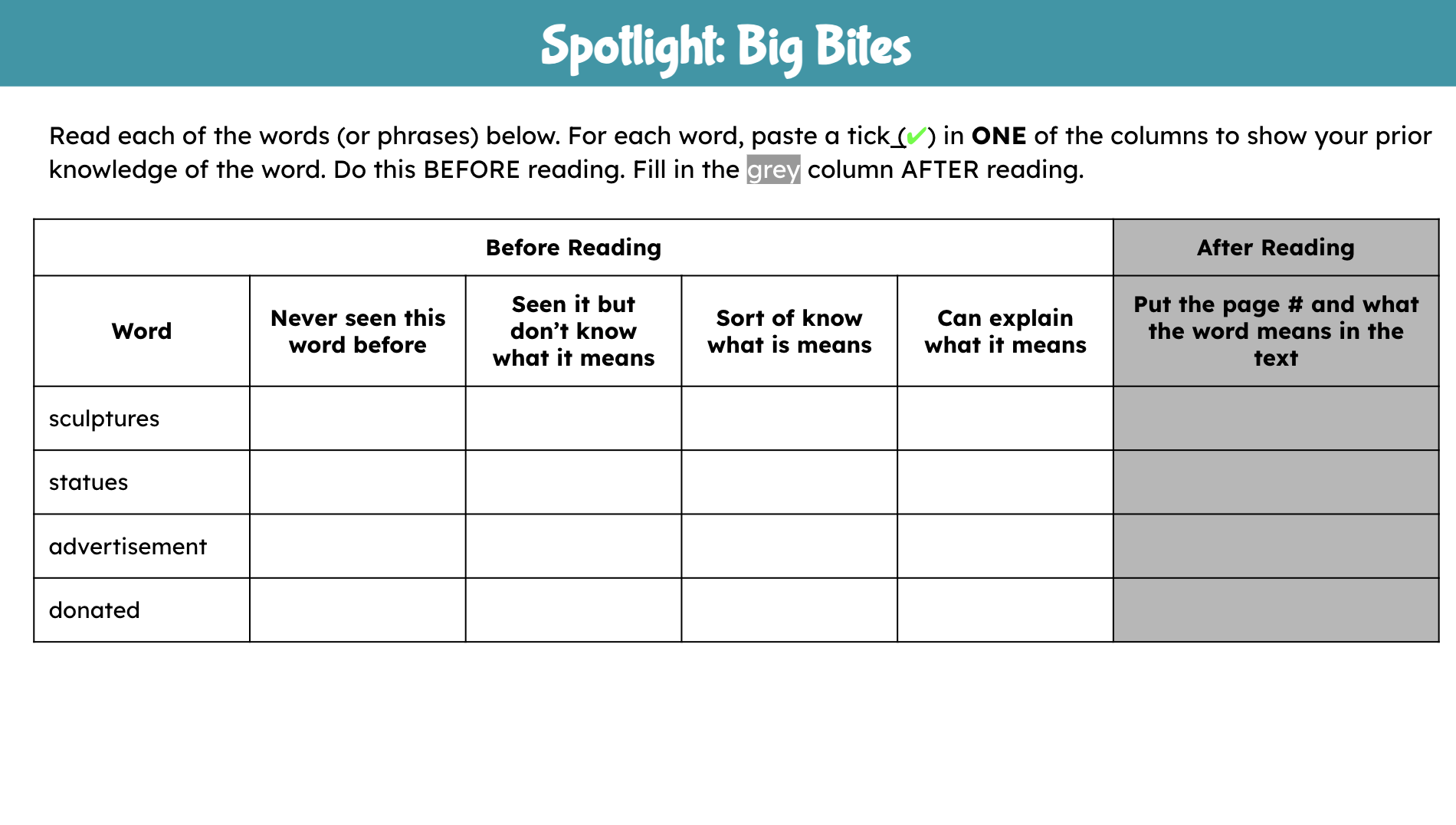
One thing that we have been focusing on during RPI is vocabulary and how we can create tasks that are specifically linked to key words from the text. I have been adding these into my follow up tasks. One of these tasks that I really love is word associations as it make the students think about other words that fit best with the new word they have come across and it allows them to really grasp the meaning of these key words. Another activity that my class really loves is the spotlight activity where before reading the students need to place a tick in a box for each word under one of these categories:
  • Never seen this word before
  • Seen it but don’t know what it means
  • Sort of know what is means
  • Can explain what it means
After they have finished reading the text they then need to be able to explain what this word means using the text. It also allows the students to see that they have been able to locate the word and can now explain what it means. 

Response to text tasks
Another key thing that I have implemented from RPI is follow up tasks that are really linked to the text and there is a learn, create and share element to this. By having a create task at the end of this task it allows the student to be able to create an image that will continue to solidify the meaning of the text and link to our learning intention from that week. I have also been more intentional with my questions in these follow up tasks. One key thing I have taken away from this is to have a really focused response to text task for the first text of the week. I then will have key questions from the text for the other text with follow up questions and then focus on using generic follow up activities that the students can choose from to continue to develop that skill but with a bigger focus on that first text and using the second text to supplement understanding. 

Picture prompts
Another key element that I have added into my follow up tasks and guided reading sessions are pictures. From these pictures I then ask a range of different questions that require the students to infer meaning from what they are seeing. Pictures are a powerful tool as they are a screenshot in time and are a less invasive way of getting the students to think critically about a text. 

I have used a range of different implementations so far and I will continue to evaluate these and check in with students to see that they are working. These are the key ones that I have been looking at with my inquiry and I will continue to develop and change these over the course of this term and term 4.

Tuesday, 6 August 2024

Restating the Question - Causal Chain

One thing that I have been working on when looking at my inquiry is creating a casual chain. Below I have shared my casual chain where I have looked at my inquiry focus question in detail and have thought about how I can show changes in my students achievement. A causal chain is when a cause leads to an effect and that effect becomes the cause of another effect A leads to B. B leads to C. C leads to D. During the process of my inquiry these year there have been several events that have occurred that have lead to changes in my focus as well as my own practice. Below I have completed my casual chain of events that have led to changes and improvements to my inquiry. This also outlines the roles that I as a teacher play in these changes as well as what is expected from the students and the changes in their roles. 

My focus question for this year is:

"Will implementing ground rules for talk and collaborative activities during guided reading sessions enhance my students' confidence, facilitate meaningful group discussions, and improve their reading comprehension?" 

Some key things that I have been looking at is 

  • Facilitating ground rules for talk so that students are able to share thoughts and ideas about the text with each other and think more critically about what they are reading. 
  • Being able to have critical discussions around what students are reading. Thinking about author's purpose. Through this I hope to build extended discussions with my students so they can do this independently. 
  • Improving understanding of comprehension through inferring, applied knowledge and understanding vocabulary.

In some of my previous posts I have talked about why I have chosen to look at these areas as well as what I might try differently in the classroom to have accelerated shift in reading. I have outlined these in a lot more detail in my casual chain above. Through these implementations and changes I have been able to solidify my inquiry focus and my next steps in order to see if these implementations are successful. I hope that the changes that I have made throughout this inquiry will continue to show results in academic achievement as well as student overall wellbeing and enjoyment for reading.

Tuesday, 23 July 2024

Mid Year Reflection

 My focus question for my CoL injury this year is:
"Will implementing ground rules for talk and collaborative activities during guided reading sessions enhance my students' confidence, facilitate meaningful group discussions, and improve their reading comprehension?" 
Through research and attending RPI so far this year I have been able to start implementing a range of different strategies in reading which I will outline in this blog post in more detail.

Ground rules for talk
One of the first things we looked into with RPI was setting up group norms and introducing ground rules for talk. These are the key rules that we have implemented in our guided reading sessions as well as follow up task time for the students.

  1. Actively listen and don’t talk when others are talking.
  2. Respectfully take part by giving ideas with reasons and evidence 
  3. Ask questions to increase understanding
  4. Make sure everyone has a chance to take part
  5. Stick to the topic
  6. Try to look at both sides of the issue. We learn from each other.
We have been using these rules during guided reading sessions and I have been having reading group sitting with each other after reading so that they can continue on these discussions. One thing that I have noticed is that there is a lot of teacher lead discussions during guided reading and this has allowed me to try and lessen this talk and allow the students to have conversations. It is a work in progress at this stage and next term I am looking at creating two smaller groups from my target group so that the students have more opportunities to share and hopefully smaller groups will allow the students to feel more comfortable sharing with each other. 

Would you rather
I have sourced a range of different would you rather prompts that I will start using at the beginning of my guided reading sessions as this will allow the students to have an opportunity to share their own ideas and thoughts around a topic and hopefully this will allow for more extended discussion during and after guided reading from the students. 

Data
It has been a really good time to reflect on my mid year data and to also make sure that I have collected enough baseline data to see if my intervention was successful at the end of the year. 

Next steps
I will continue to implement these changes into my guided reading sessions along with my reading planning. I will also continue to have regular check ins with my students as well as analyse my reflection data to see what areas need continued improvement. I will also continue to implement changes from our RPI sessions next term into my reading program. 


Tuesday, 2 July 2024

Mid Year Data

We have just completed our mid year running records so this is the perfect time to look at my mid year data and compare this to the start of the year to track progress so far. I have added in one extra student to my data set "Student J" as I would also like to track their progress throughout the year and they will be in the same reading group as my other students. I don't have any 2023 data on this student but I have data from mid year testing that I have added into the data set as well. I have created two different graphs, one looking at reading age and the other looking at reading level. I will explain each of the graphs in detail below. 

This first graph shows the progress of my students looking at reading age. From this data I can see that most of my students have made some progress in reading age. All of the students who have made progress in their reading age has made gains of 6 months progress in reading. This testing has also provided an indication of next steps and what areas that I need to work on with this group of students. 

This next graph shows the progress of my students looking at reading level. I do like to look at this data as well as because some of these reading ages are in a band of two tests and even though students have made 6 months progress they has also made huge gains in reading level. From this graph I can see that some students have made progress of one level and others have made progress of two reading levels within six months of learning. 

Next steps:
From this data and analyzing the running records I can see areas that need to be worked on. One of these key areas is vocabulary and students understanding the words that they are reading in a text. The other key areas that I have noted that need to be worked on is inferring meaning and applied knowledge. These will be the key areas that I will be working on with these students in the next two terms. 

Reflections for Bursts and Bubbles

First off I would like to say a massive Thank You to Fiona Grant for all of her support and guidance during my CoL inquires over the years. ...